

According to the Mayo Clinic, gender dysphoria is defined as, “The feeling of discomfort or distress that might occur in people whose gender identity differs from their sex assigned at birth or sex-related physical characteristics,” (Mayoclinic.org). Originally, gender dysphoria was described as a mental illness, “gender identity disorder,” meaning it is psychological in nature. Recently, however, the diagnosis has changed to “gender dysphoria” to allow medical professionals to diagnose the symptoms of gender dysphoria in an effort for those suffering the symptoms to be able to get help and treatment. Gender dysphoria can happen at any stage in a person’s life: Childhood, adolescence, young adulthood and even as an older adult. Some of the symptoms are a marked difference between your inner gender identity and primary and/or secondary sex characteristics, or anticipated secondary sex characteristics in young adolescents, plus two of the following:
- A strong desire to be rid of primary and/or secondary sex characteristics because of a marked difference with your inner gender identity, or a desire to prevent the development of anticipated secondary sex characteristics in young adolescents
- A strong desire for the primary and/or secondary sex characteristics of the other gender
- A strong desire to be of the other gender or an alternate gender different from assigned gender
- A strong desire to be treated as the other gender or an alternate gender different from assigned gender
- A strong conviction that you have typical feelings and reactions of the other gender or an alternate gender different from assigned gender
- Significant distress or impairment in social, occupational or other areas of functioning (Mayoclinc.org)
Okay, now we have all of the definitions out of the way, so we can talk about the most important things: One, the health and well-being of your child, and two, the health and well-being of your child’s spirit.
Now, as a Christian, the Bible tells us there is only one truth regarding gender dysphoria: God creates humans in His image, male and female (Genesis 1:27).
I have read countless articles and books on gender dysphoria, and in my teaching career, I have encountered and even bonded with several students who were either mid-gender transition or post-gender transition. I teach students at the high school level, so most transgender students I meet have been in hormone treatment or counseling to transition to another gender long before they met me. There are two main schools of thought on gender. The secular view mainly goes like this: Gender is fluid and there are several genders based on DNA expression after birth. The sex organs only pertain to birth sex, while gender, is fluid. One can switch between any gender at any time based on how they perceive themselves in the moment. Surprisingly, the Christian view is mixed. Some Christians believe in the Sovereignty of God and that He creates only two genders. Gender is an expression of birth sex and therefore is fixed and not fluid. Other Christians believe that biblical doctrine may be outdated or not caught up with science that “proves” there are many gender expressions. Both Christian views will say that God made a person the way they are, but the difference is that some believe “as they are” means only male or female, and others interpret it to mean God created gender fluid people.
I have worked with five students in my career who were somewhere on their journey to gender transition when they were in my classroom. I had a few of these students for multiple years in a row. One thing that all five transgender students I have worked with in my classroom had in common was an absence of God in their gender equation. All five had no “true north” about creation, God’s design, their purpose, etc. It isn’t that any of them were anti-God, it is just that God was not a part of their home life or their belief system. One student shared that God was not a part of her life and that everything is just random in the universe, and sometimes, by pure chance, mistakes happened.
While I have not read every single article or book written by Christian authors on gender dysphoria, I certainly have read a great deal. What I don’t understand is why many Christian resources will give partial truths and leave room for secular or creative interpretations of the truth. I found only one site, Focus on the Family, that told only one truth about gender and gender dysphoria from a biblical perspective, out of the dozens I researched. I was only researching Christian counseling sites. The resource links on this site were all in line with biblical principles and truths on the subject. Focus on the Family, while advocating for gentle care and concern for the child, along with Christian counseling, doesn’t fold on the premise that the goal is to get to the other side of this dysphoria and be able to accept one’s self and thrive as the wonderful and unique person that God created, in agreement with the birth sex and sexual development with the regular onset of puberty.
Now for the pressing question, Parents, what should you do if your child begins to struggle with gender identity? Honestly, I wish I had the one-shot, fix-all answer. Each child and situation is different. There are many reasons a child will say or think they wish they were a member of the opposite gender group. Most reasons stem from some sort of self-esteem issue of not being “good” at being their gender, liking more of the activities and toys of the other gender, or aligning themselves with the opposite sex parent or role model. Male and female can include all sorts of traits, preferences, and likes/dislikes. At some point, someone decided that liking things that are typically associated with the opposite gender must mean you are in the wrong body to accommodate your mind. This is not a truth proven by any science. The best advice I have found is to pray and seek Christian counseling, preferably by a professional who specializes in gender issues. So why, you may ask, am I even writing this article if I can’t give you the answers you are looking for? I may not know what to do in each of these sensitive situations, but I can definitely tell you what not to do.
If you are a Christian, and you love your child, and of course you do, the worst thing you can do is feed into the belief that gender is fluid and a choice. You, as the parent, need to be the voice of reason right now. You are the authoritative truth to your child. Your child trusts you to tell them the truth and guide them. God entrusted you to raise that child and lead that child to the truth of who God is and who they are. Should you be sensitive to the real feelings of confusion, disappointment, and maybe even grief that your child may experience when they realize they don’t get to be someone other than who God created them to be? Of course you will. But the “cure” is partially dependent on you telling them that: 1. There is a God (Genesis 1:1); 2. God creates people as unique individuals with love and careful design to fulfill a purpose only they can fill with their God-given talents and dreams (Psalms 139:14-16); 3. God loves your child and you love them, exactly as they are (John 3:16-17, Romans 5:8); and 4. God is with them and they are not alone. He wants to heal them and wants your child to be joyful and to have hope (Jeremiah 29:11, Proverbs 3:11-12).
Let’s take a moment and think about this in practical terms:
Let’s say your son or daughter came to you and said they hate their nose. The child feels his or her nose is too big and he or she wishes they were born with a different nose. Maybe they have the same nose as their same gender parent, and they wish they had the nose of the other parent, a small cute nose…. Would you:
- Have the doctor cut it off?
- Tell the child that maybe they were born with the wrong nose?
- Tell the child God messed up and indeed gave them the wrong nose? And that if they want a different nose they can have one?
- Tell the child that the same God who created the heavens, the earth and the universe in six days doesn’t care enough about them to consider how they would feel with this nose?
- Tell the child that God just must not care, or like giving a bad Christmas present, He didn’t get it right because He, the creator of the child, has no idea what the child likes or what nose would be the best for that child?
- Tell the child when he or she is 10 or 12 years old that you will take them to the doctor to start talking about rhinoplasty?
Or do you deal with the superficial self-esteem issue by telling them that their nose is, indeed, perfect and exactly right for their face? Do you tell the child they are made in the image of God and also the same gender parent who has the same nose and how it shows that the child belongs to this family? You would say that the child is loved just as he or she is, with the amazing family nose, that he or she is wonderful and unique. You would tell the child that God spent time on every detail of their being because He loves the child and so do you. And that they will learn to love their nose and that others will also like it.
Doing the latter will make the child understand that it is just a nose. That it is just one part of all of the amazing gifts and talents and traits that make the child special and unique and beautiful. The nose has nothing to do with what the child can accomplish in his or her lifetime. You, like God, love every single part of the child and nothing needs to change to improve upon God’s design.

Doing the former communicates to the child that he or she is correct; the nose is ugly. He or she is right to hate it. You, the parent hate it that the child has to live with this nose and that you will do everything in your power to help them change it so they will be happy. Because they can’t be happy while they hate their nose. This approach all but guarantees that your child will develop a deeper hatred for their nose, and then their whole face, and then themselves. After all, if one part can be a mistake, maybe others are as well. And you, the parent, the one who should love them unconditionally, you acknowledge that there is a flaw. You might even hate them, too, deep down. And God clearly doesn’t care, right? If one part can be so wrong, what else did God fumble? And they begin to pick at all the things about themselves that are different and eventually, see nothing good is left.
Maybe it will be better after they escape this horrible nose. It will be just a memory when the new nose fixes all they see as wrong.
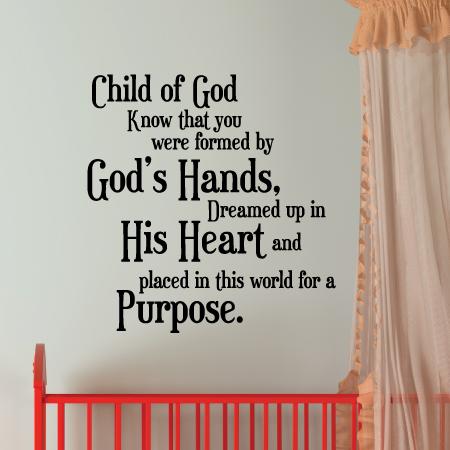
Parents, be careful with your messaging. Teach children to love themselves and that they are fearfully and wonderfully made by a loving God, on purpose, and for a purpose. This is the time to turn to absolute truth about who the child is and who God is. Although Gender Dysphoria is a bigger issue than a big nose, both are superficial, meaning they center around what the child believes about their physical body. Show the child who they are in God, and then start developing their gifts, dreams, and talents. Once they discover that they have a passion for something, and that they are good at it, the superficial issues will begin to fade away. One thing that experts agree on, is that the body is not the problem. The problem is what one believes about the body. The body can’t hate itself, only the mind can hate. If you change the body, the feeling that something else is wrong will continue. You need to change the child’s mind about the body, not change the body to match the mind.
Parents, keep fighting for the truth of who God is. Tell your children you love and accept them unconditionally as God does. Develop their gifts and talents so they will see they are much more than just the physical body. And let them know God is with them and will always be with them, whenever they feel lesser than. They are a child of the God of the universe. They are loved and enough, just as they are.
 joyinamadworld.com